Siphons and Hydrostatic Pressure: Pythagorean Cup
Background
| Background | Example of Siphon [4] |
|---|---|
The Pythagorean cup is a cup that allows you to pour in a liquid to a certain height, and if you pass that specific height, the cup starts to siphon all of the liquid out of the bottom. The cup was originally created to teach moderation and not overindulge on wine. The Pythagorean cup uses a siphon which uses gravity and atmospheric pressure to allow continuous flow of a liquid from one reservoir to another. Today, siphons are used in all kinds of applications ranging from moving oil from reservoirs to cars, large scale transportation of water to different areas, to even removing water from a flooded basement. | 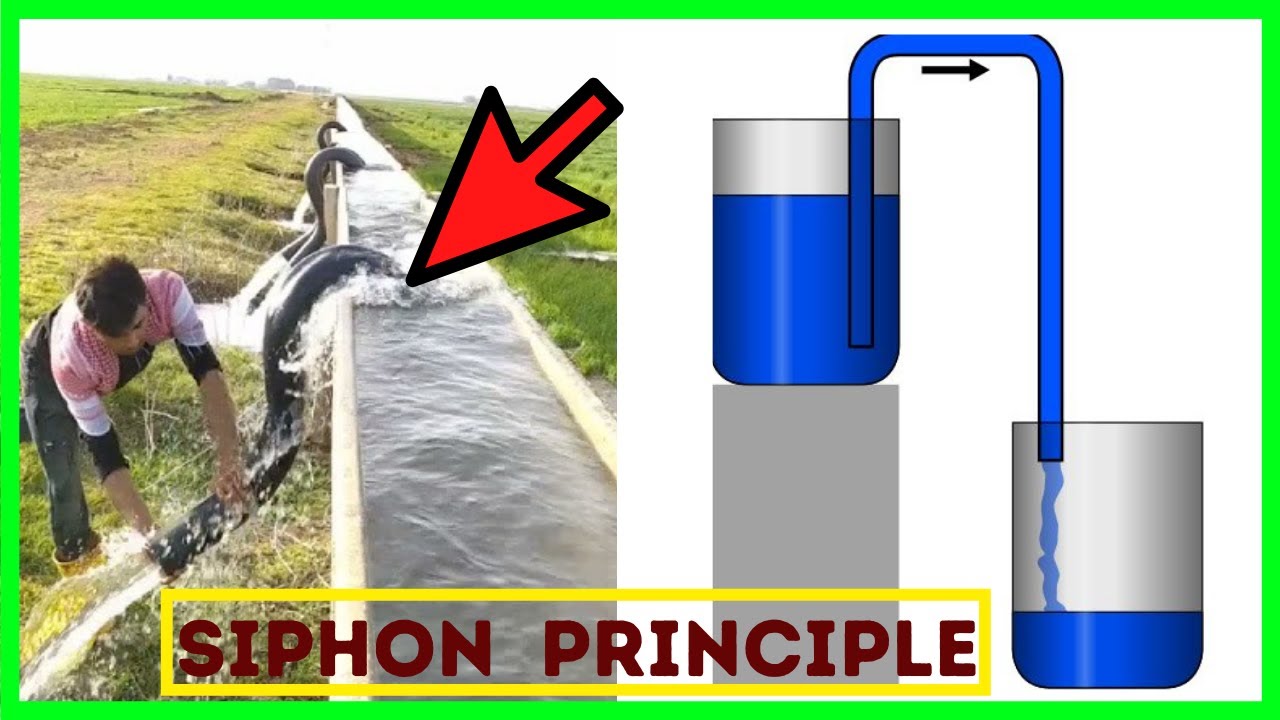 |
Siphon
A tube used to convey liquid upwards from a reservoir and then down to a lower level of its own accord. Once the liquid has been forced into the tube, typically by suction or immersion, flow continues unaided.
Essentially you can start a siphon with a pressure differential, and from there the weight of the liquid in the tube connecting the different reservoirs drives the siphon until one reservoir is empty or the heights of the two reservoirs are the same.
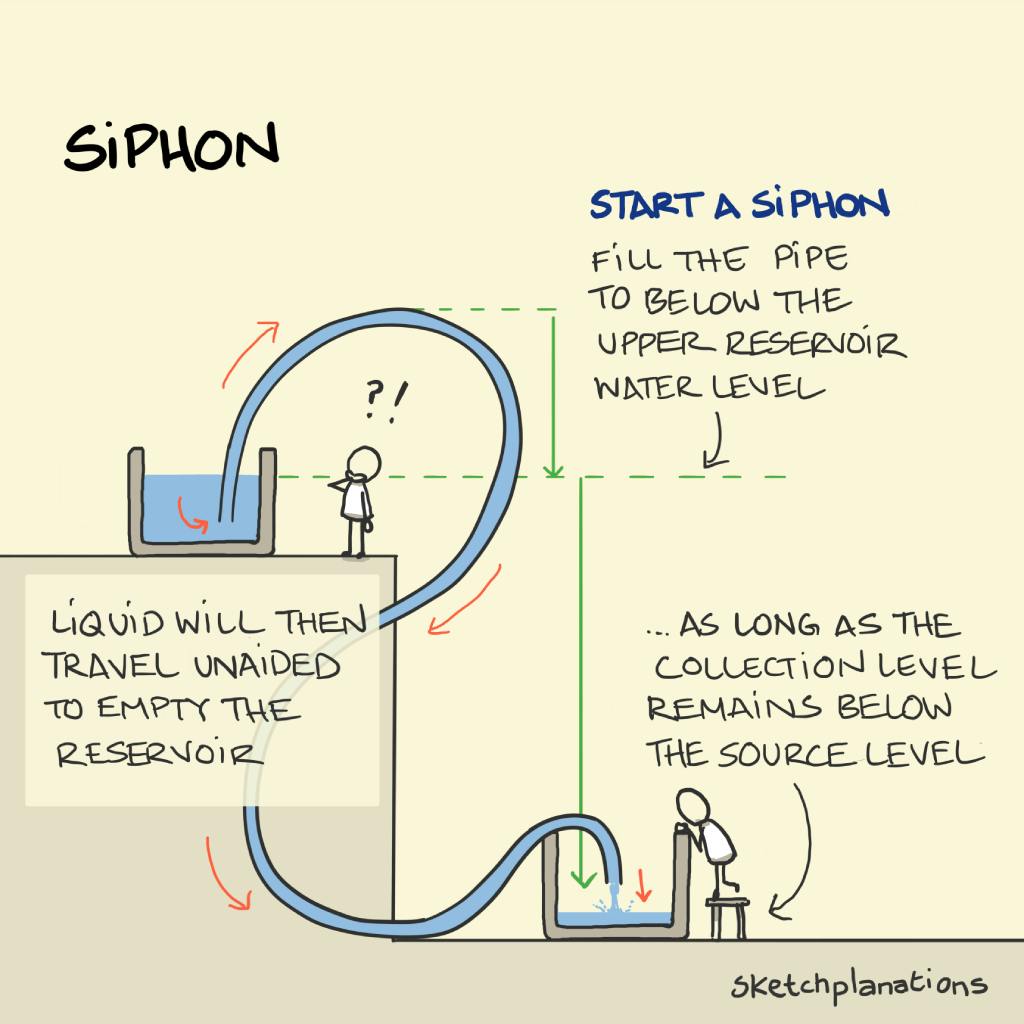
Application of Siphon [1]
Project Description
| Pythagoras and his Cup [2] | |
|---|---|
We have created a Pythagorean cup that is a cup with a siphon design inside of the cup. When water is filled in the top of the cup, it will follow the siphon path which initially travels up and around the circular path of the cup, leading to a small arch drop off. When the water fills the cup enough to reach over the arch, the liquid in the arch (side leading to the bottom hole) will have a larger weight and will drive the siphon effect which results in the liquid in the cup being totally drained out of the bottom. |  |
Height of Siphon Starting
| Siphon Starting Height | Height is Highlighted |
|---|---|
| The height of the drop off point, which leads to the center hole is the height which if passed, the siphon starts and empties the cup entirely. | 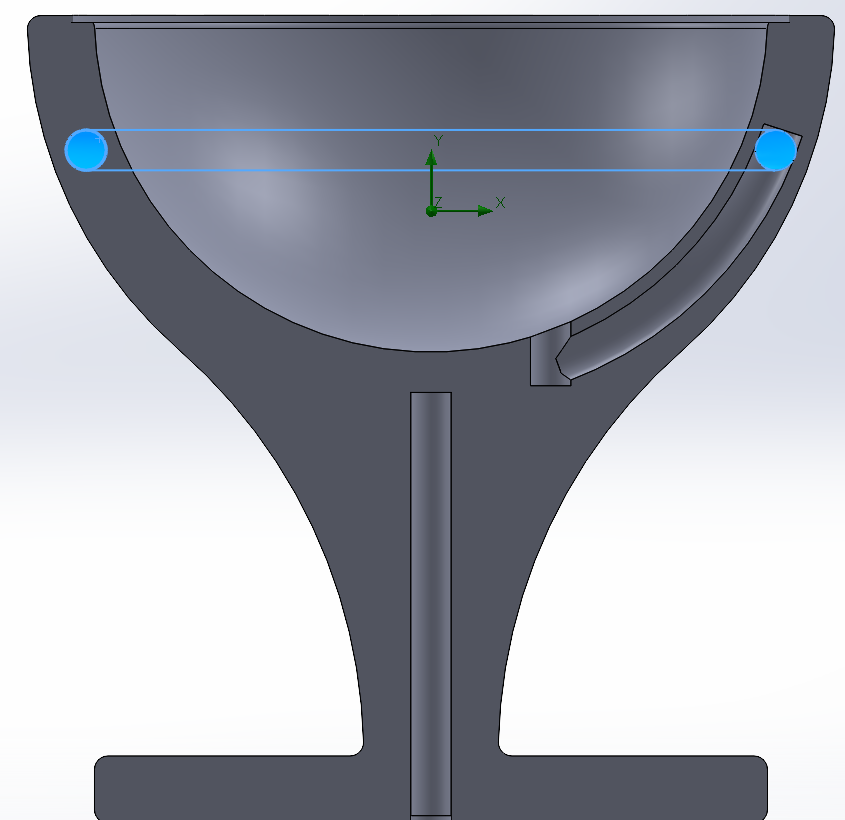 |
Videos
Flow Simulation
SolidWorks flow simulation of the cup’s internal siphon path.
Final Build
CAD Files

SolidWorks files to create the cup.
Conceptual Questions
What are the 3 conditions for a siphon to work?
Answer
Tube with liquid must not have any air gaps
The destination reservoir must be at a lower height than the original reservoir
The transfer tube must be filled with liquid before the siphon can start
Would a siphon work in a vacuum?
Answer
No, because a siphon depends on the force of gravity to pull the liquid down through the pipe and the atmospheric pressure to continue feeding the original reservoir with liquid.
Conclusion
The idea of the greedy or devious cup has a very interesting history related to teaching moderation and punishing greedy users. It was made in 500 B.C.E. The Pythagorean cup demonstrates how siphons work. Essentially in the cup, when water is filled high enough to move over the last turn before meeting the straight path out of the bottom of the cup, a siphon will start and will drain all of the liquid out of the cup. The cup can be 3D printed with no supports which adds a nice finish as well as no hassle attempting to get internal supports out of the cup. Our exact cup can be printed using the provided STL file or, students can challenge themselves to design their own cup and test it out.
References
[1] Hey, J. (2023, June 25). Siphon. Sketchplanations. https://
[2] Puiu, T. (2023, May 5). The Pythagorean Cup - the vessel that spills your booze if you’re too greedy. ZME Science. https://
[3] Siphon system for moving water: Van heck group. Van Heck Group EN. (2019, October 15). https://
[4] YouTube. (2021, April 28). Siphon for irrigation | siphon principle. YouTube. https://